
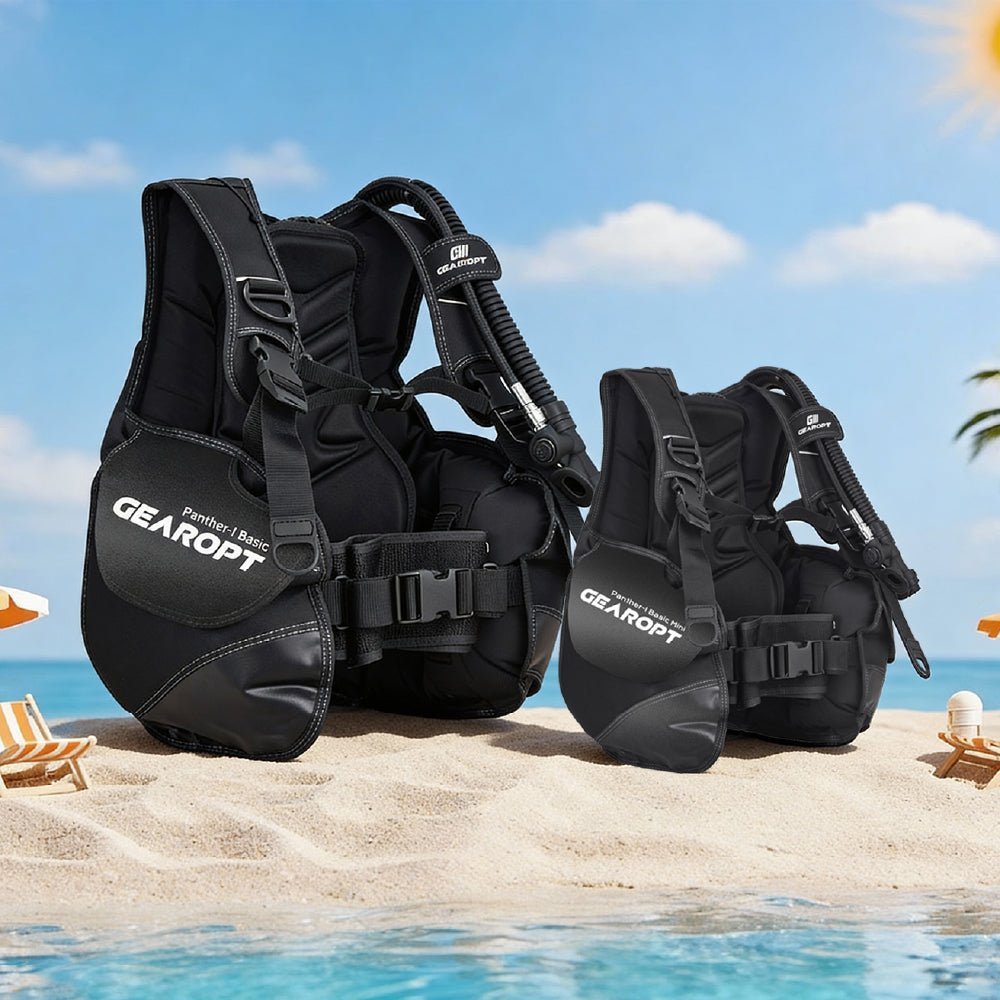
What Is a Buoyancy Compensator (BCD)?
A Buoyancy Compensator Device (BCD) is one of the most essential pieces of scuba diving equipment. It allows divers to control their buoyancy underwater by adjusting the amount of air inside the BCD’s air bladder.
By adding air from the tank into the BCD, a diver becomes more buoyant and can ascend toward the surface. Releasing air reduces buoyancy, allowing the diver to descend or maintain neutral buoyancy at a desired depth. Proper buoyancy control is critical for safety, comfort, and efficient air consumption during a dive.
Why Owning Your Own BCD Matters
Many divers delay purchasing a BCD, assuming rental equipment is sufficient and more cost-effective. While renting may seem convenient, familiarity with your own dive gear is a major safety advantage.
Each BCD differs slightly in design, buoyancy characteristics, and control layout. Dump valves, inflator positions, and strap configurations can vary significantly between models. When you rent a different BCD for every dive, you reduce muscle memory and reaction speed—something that can turn a minor issue into a serious situation underwater.
Owning and regularly diving with the same BCD helps ensure consistent performance, faster responses, and a safer overall dive experience.
BCDs and Gender-Specific Design
Historically, scuba equipment was designed primarily for men. As more women entered the sport, manufacturers recognized the need for better-fitting gear and began developing gender-specific BCD designs.
Key differences often include:
- Chest strap placement: Lowered, repositioned, or removed to improve comfort for female divers
- Shoulder strap shape and width: Narrower and contoured designs for improved fit
- Overall cut and proportions: Better alignment with different body shapes
By taking gender into account, modern BCDs offer improved comfort, mobility, and safety for all divers.
BCD Style and Fit
The most common BCD style is the jacket or vest-style BCD, which wraps around the diver’s torso and includes shoulder straps and front buckles.
A properly fitting BCD should feel like a well-fitted jacket:
- Snug but not restrictive around the torso and shoulders
- Secure without slipping or riding up
- Comfortable straps that tighten easily without pressure points
- Inflator hoses and dump valves that are easy to reach
Correct fit is essential—not only for comfort, but also for maintaining stable buoyancy and trim underwater.
Bladder Placement and Lift Capacity
BCDs generally feature either rear-mounted air bladders or wrap-around bladders. There is no universally “correct” option—this choice largely depends on personal preference.
- Some divers prefer rear-inflation BCDs for improved trim and balance underwater
- Others feel more stable with wrap-around bladders that distribute buoyancy more evenly
Regardless of bladder style, a BCD must provide sufficient lift to safely bring the diver to the surface while wearing all dive equipment.
Lift requirements vary by body type and gear load. Divers with more muscle mass and lower body fat typically require greater lift, while divers with more natural buoyancy may need less. Always choose a BCD that matches your size, weight, and diving conditions.
Integrated Weight Systems
Many modern BCDs feature integrated weight systems, allowing divers to distribute weight using removable pouches rather than relying solely on a traditional weight belt.
Benefits include:
- Improved comfort and weight distribution
- Reduced strain on the lower back
- Increased safety during emergency ascents
In an emergency, integrated weight systems allow partial weight release, rather than dumping all weight at once. This enables a controlled ascent, reducing the risk of injuries such as decompression sickness.
Attachment Points and Gear Management
Beyond buoyancy control, BCDs serve as the primary platform for carrying dive accessories. Most models include D-rings and attachment points for securing essential gear such as:
Dive lights
- Pressure gauges
- Regulators and octopuses
- Accessories and tools
Choosing a BCD with adequate attachment points ensures your gear stays accessible without interfering with movement or buoyancy.
Final Thoughts
A BCD is more than just a flotation device—it is the foundation of a diver’s safety, comfort, and control underwater. Selecting the right BCD based on fit, lift capacity, weight integration, and personal diving style can significantly improve both performance and peace of mind.
Understanding your equipment—and diving with gear you know well—is one of the most important steps toward safer, more enjoyable dives.


Dejar un comentario
Este sitio está protegido por hCaptcha y se aplican la Política de privacidad de hCaptcha y los Términos del servicio.