
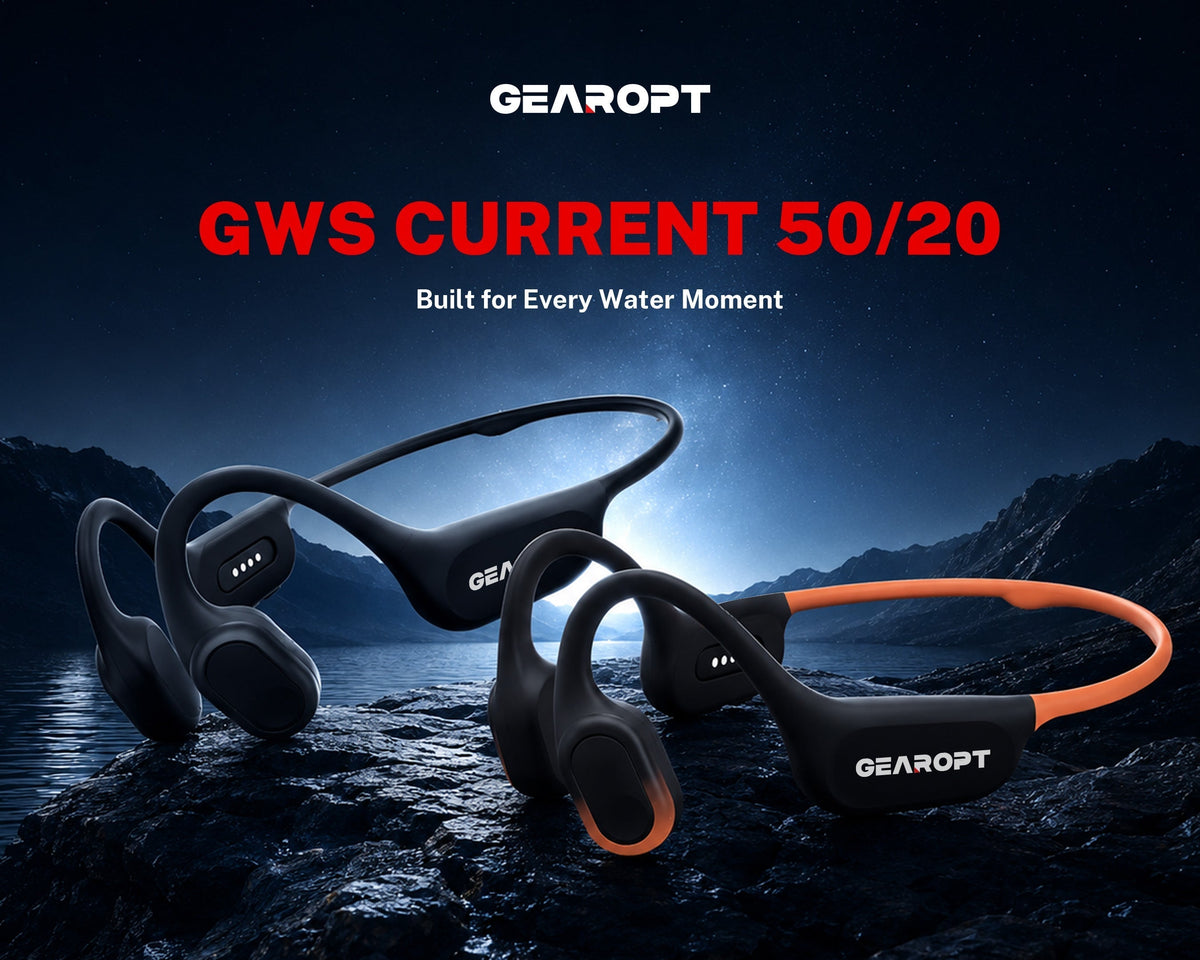
If your Bluetooth headphones work perfectly on land but cut out as soon as you enter the water, the headphones may not be faulty. The real issue is how wireless signals behave underwater.
This guide explains why Bluetooth stops working below the surface, how swimmers can listen to music reliably, and what to compare when choosing waterproof bone conduction headphones.
Choosing a model now? Compare CURRENT 20 for pool and shallow-water use with CURRENT 50 for deeper water activities.
Does Bluetooth work underwater?
Not reliably. Bluetooth uses 2.4 GHz radio waves, and water absorbs these signals far more strongly than air. Even a short distance between your headphones and phone can interrupt the connection once either device is submerged.
That means a strong Bluetooth connection beside the pool does not guarantee continuous playback underwater. Keeping a phone on the pool deck, at the edge of the lane, or in a waterproof bag will not solve the underlying signal limitation.
Bluetooth is still useful above water for everyday listening, running, gym training, calls and surface-level activities. For swimming, snorkeling or diving, the reliable solution is local playback from storage built into the headphones.
How to listen to music while swimming
Choose waterproof headphones with built-in MP3 storage. Music files are stored directly on the device, so playback does not depend on a phone or an underwater wireless signal.
- Transfer compatible audio files to the headphones before your session.
- Switch from Bluetooth mode to MP3 mode.
- Start your playlist before entering the water.
- Check the fit with your goggles, swim cap or mask.
- After swimming, rinse the headphones with fresh water and dry the charging contacts completely.
This setup gives swimmers a consistent playlist without leaving a phone at the pool edge or trying to maintain a connection through the water.
Why bone conduction works well for water sports
Bone conduction headphones use an open-ear design instead of blocking the ear canal with traditional earbuds. Many swimmers and water-sports users prefer this format because it can provide a secure neckband-style fit while leaving the ears open.
Open-ear awareness can also be useful around a pool, boat or training group. It does not replace normal safety precautions: always remain aware of other people, instructions and changing water conditions.
What to check before buying swimming headphones
Water-depth rating
“Waterproof” is not enough information on its own. Check the model's stated depth rating and make sure it matches your activity. Pool swimming and shallow snorkeling have different requirements from deeper diving-related use.
Built-in storage
For underwater listening, onboard MP3 storage is essential. Both GEAROPT CURRENT models include 32GB of built-in storage, so music can play locally below the surface.
Battery life by playback mode
Battery duration can differ between Bluetooth and MP3 modes. GEAROPT CURRENT headphones provide up to 15 hours in Bluetooth mode and up to 6 hours in MP3 mode. Actual duration may vary with volume, usage and conditions.
Fit with water-sports equipment
Test the headphones with the goggles, cap or diving mask you normally use. A secure fit matters more than a specification on paper, especially during turns, entries and active movement.
Care after pool or saltwater use
Rinse the headphones gently with fresh water after use, then allow them to dry completely before charging or storage. Keeping the charging contacts clean and dry supports reliable long-term use.
CURRENT 20 vs CURRENT 50: which model fits your activity?
Both models combine Bluetooth 5.4 for surface use with 32GB MP3 storage for underwater playback. The main difference is the stated water-depth rating.
| Feature | CURRENT 20 | CURRENT 50 |
|---|---|---|
| Depth rating | Up to 20m | Up to 50m |
| Best suited to | Swimming, snorkeling and shallow-water activities | Deeper-water diving and demanding water-sports use |
| Storage | 32GB MP3 | 32GB MP3 |
| Connectivity | Bluetooth 5.4 + MP3 mode | Bluetooth 5.4 + MP3 mode |
| Battery | Up to 15h Bluetooth / 6h MP3 | Up to 15h Bluetooth / 6h MP3 |
Choose CURRENT 20 for swimming and shallow-water use
Choose CURRENT 50 for a higher 50m depth rating
Common questions
Can I stream Spotify underwater?
No. Streaming services require a live wireless connection, and Bluetooth does not transmit reliably underwater. Use audio files stored in the headphones' MP3 memory.
Can I leave my phone beside the pool?
You can use your phone for Bluetooth playback above water, but once the headphones are submerged, the connection will normally become unstable. Switch to MP3 mode before swimming.
Can I make calls underwater?
No. Calls require Bluetooth and microphone performance intended for land or surface use. Underwater listening should use local MP3 playback.
Do waterproof headphones need to be rinsed?
Yes. After pool or saltwater use, rinse them gently with fresh water and dry them completely before charging.
The simple answer
Bluetooth is excellent above water but is not the right technology for continuous underwater audio. For swimming or diving, choose headphones with a suitable depth rating and built-in MP3 storage, then play music directly from the device.
Compare the full GEAROPT waterproof bone conduction headphone collection, or read our guide to using bone conduction headphones for swimming.
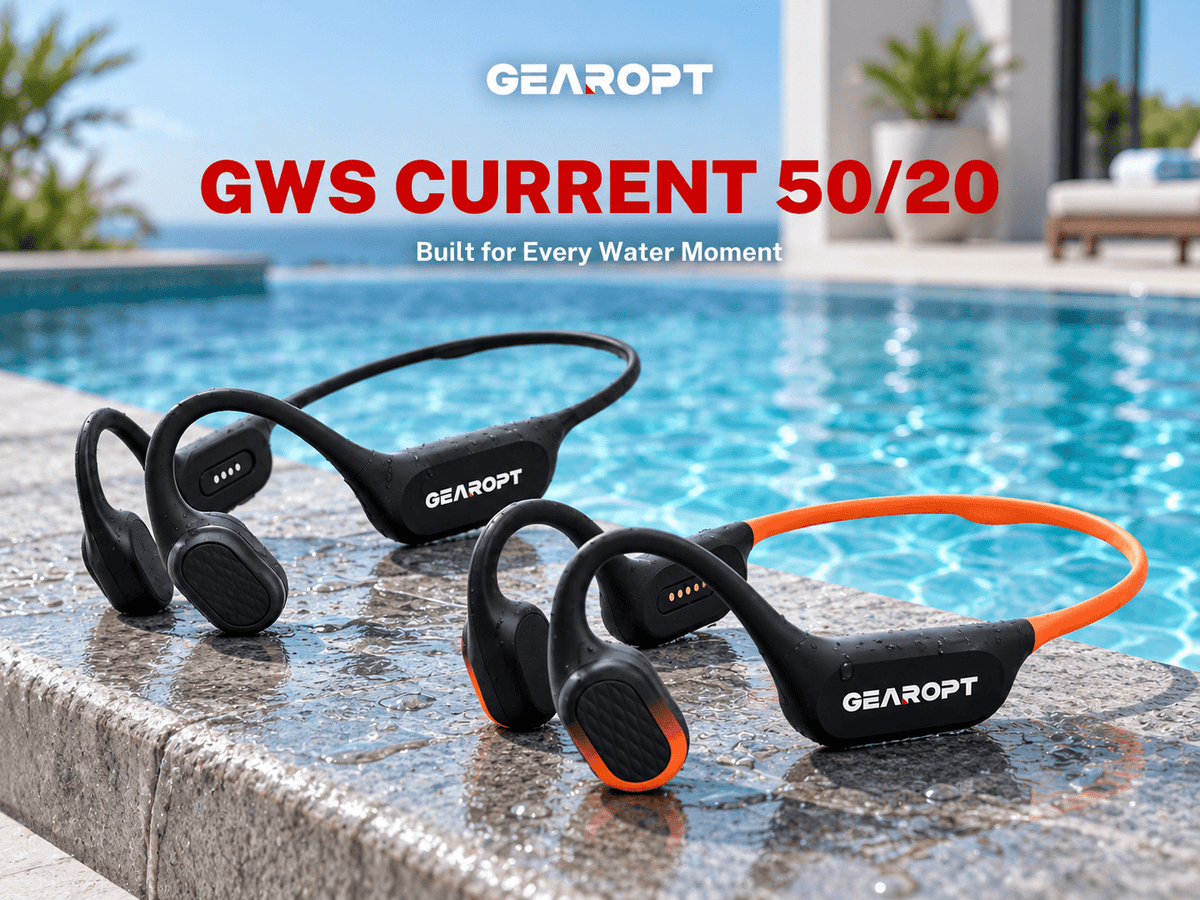
Ready for your next water session? Choose GWS CURRENT 20 for pool and shallow-water training, or GWS CURRENT 50 for deeper water activities. Both models include 32GB offline MP3 storage, free shipping and a 1-year product warranty.

Laisser un commentaire
Ce site est protégé par hCaptcha, et la Politique de confidentialité et les Conditions de service de hCaptcha s’appliquent.