
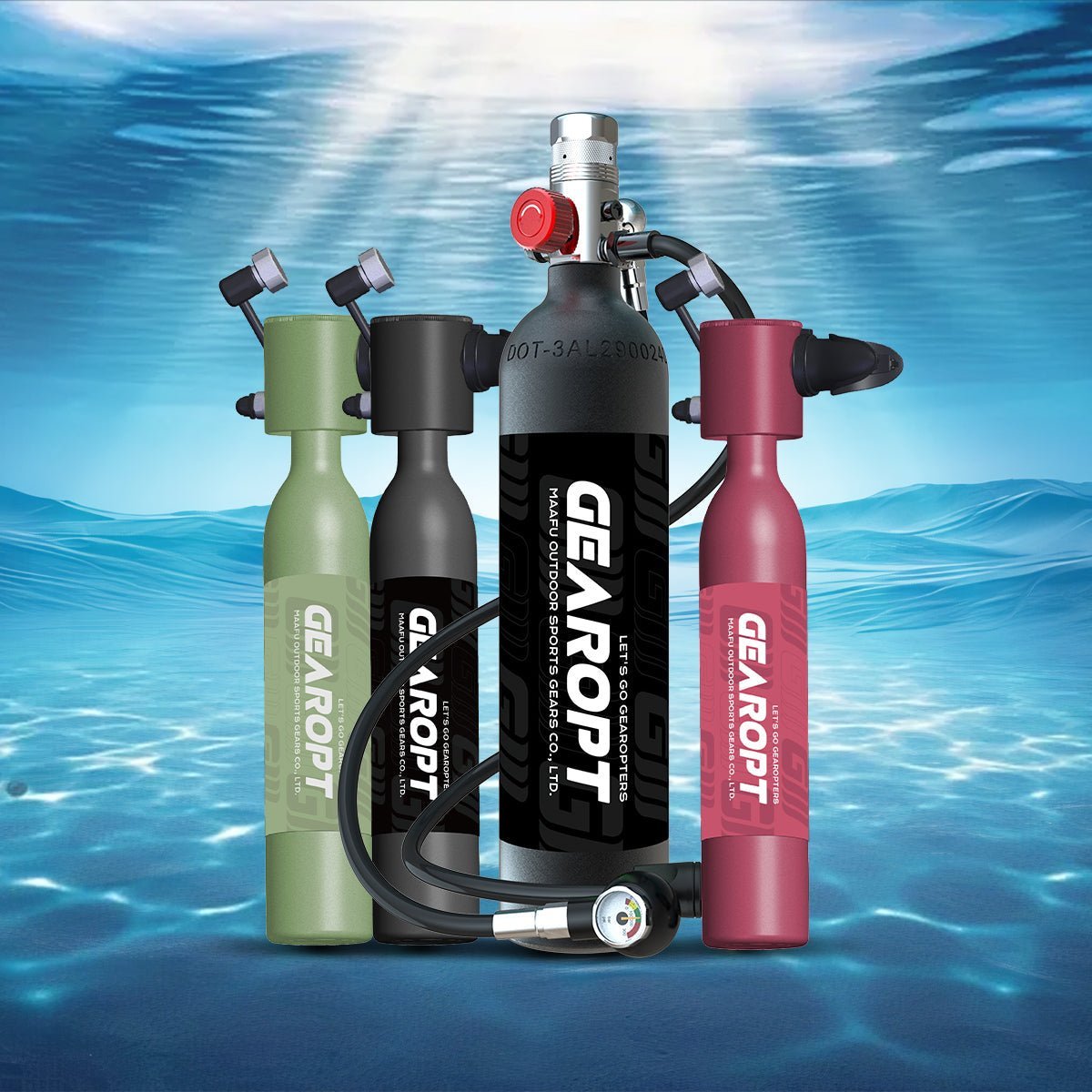
What is Mini Scuba Tank
The underwater world is fascinating, but for many people, traditional scuba diving can feel out of reach. Heavy equipment, complex setups, and required certifications often discourage beginners from taking the plunge.
This is where mini scuba tanks come in. Compact, lightweight, and easy to use, these innovative devices allow users to breathe underwater for a few minutes without wearing a bulky scuba cylinder. Designed to democratize underwater exploration, mini scuba tanks, developed by forward-thinking brands like Gearopt, make shallow diving more accessible than ever.
In this article, we’ll explore the advantages of mini scuba tanks, essential safety considerations, how they work, and how to choose, use, and maintain the right model for your needs.
Advantages of Mini Scuba Tanks
Mini scuba tanks offer multiple benefits for casual divers, boat owners, snorkelers, and underwater explorers.
- Lightweight & Portable
Mini tanks typically weigh within 2kg on land, and feel almost weightless underwater. This lightweight design provides exceptional freedom of movement, making underwater exploration more comfortable and less tiring.
- Ideal for Short Dives
Depending on the model and breathing rate, mini scuba tanks provide 5 to 10 minutes of underwater air, with larger models reaching up to 15 minutes in optimal conditions, perfect for shallow exploration or quick inspections.
- Simple & Accessible
Designed for the general public, mini scuba tanks can be used without a scuba certification for shallow dives. Their intuitive design allows beginners and even children from around 8 years old (with supervision), to safely experience underwater breathing.
- Affordable Entry into Diving
Compared to traditional scuba setups, mini tanks are far more budget-friendly, make underwater exploration accessible without a large investment.
Safety First: Dive with Peace of Mind
Although mini scuba tanks simplify diving, safety must always come first. Follow these essential rules for every dive:
- Limit your depth: For untrained users, do not exceed 3 meters. This depth still offers excellent visibility and marine life while minimizing risk.
- Never dive alone: Always have a buddy or someone supervising from the surface.
- Follow manufacturer guidelines: Read the user manual carefully and respect all operating limits.
- Monitor your air supply: Keep an eye on the pressure gauge and surface well before running out of air.
How Does a Mini Scuba Tank Work?
Mini scuba tanks operate on the same principle as traditional scuba systems—just in a smaller format.
They consist of:
- A compressed air cylinder (typically 0.5L to 1L)
- A regulator that delivers air on demand
- A pressure gauge showing remaining air
Some models feature an integrated mouthpiece, while others use a hose, second-stage regulator, and harness for greater comfort and stability.
Refilling Options:
Mini scuba tanks can be refilled independently using:
- A hand pump (about 15 minutes)
- A mini electric compressor
- A filling station connected to a standard scuba tank
Trusted manufacturers like Gearopt ensure their products are tested, certified, and compliant with safety standards before sale.


Leave a comment
This site is protected by hCaptcha and the hCaptcha Privacy Policy and Terms of Service apply.